
Caffeine Pouches vs Nicotine Pouches: Same Format, Very Different Product
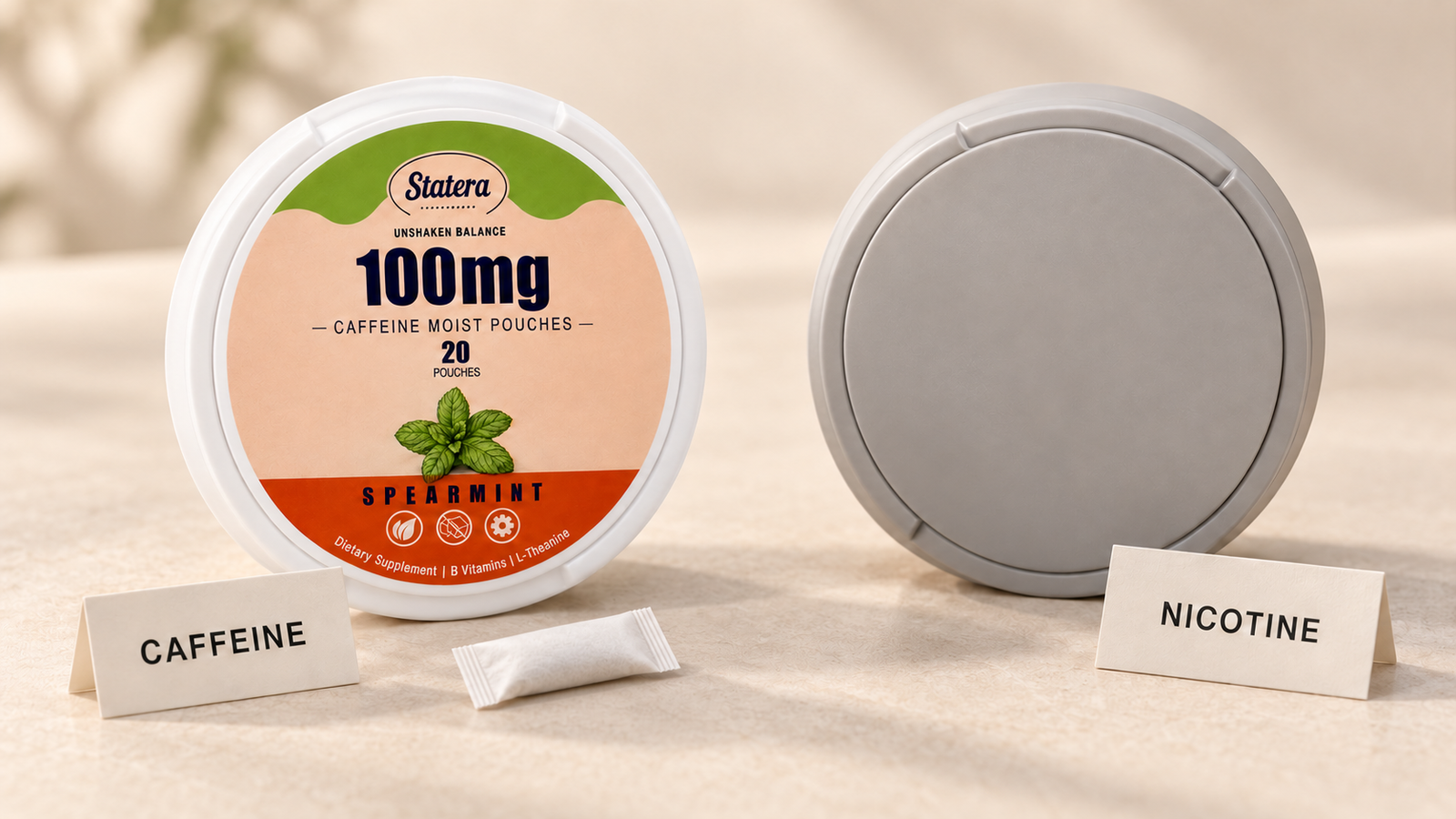
They can look similar on a shelf. What is inside them is not similar.
A round can and a small white pouch may bring a familiar nicotine brand to mind. But STATERA caffeine pouches contain caffeine and zero nicotine. Nicotine pouches contain nicotine. That is the central difference in a caffeine pouches vs nicotine pouches comparison, before flavor, packaging or the number on the lid.
Caffeine and nicotine are different active ingredients
Caffeine is the stimulant familiar from coffee and tea. A caffeine pouch puts a labeled amount of caffeine into a portioned pouch format. STATERA uses that format for adult caffeine products; its current 100mg range lists 100mg of caffeine per pouch.
Nicotine belongs to a different ingredient and product conversation. The U.S. FDA's nicotine pouch overview describes nicotine pouches as tobacco products containing nicotine, which is highly addictive. Their nicotine can come from tobacco or be made synthetically. The pouch shape does not tell you which ingredient is present.
The practical question is not whether two cans look alike. It is whether you are choosing a caffeine product or a nicotine product. A flavor such as mint can appear in either category, so taste and color cannot answer that question for you.
The comparison that matters before you open a can
This table uses STATERA as the caffeine example. Other caffeine products need their own ingredient and label check; the word “pouch” alone does not establish a formula.
| Compare | Caffeine STATERA | Nicotine pouch |
|---|---|---|
| Ingredient | Caffeine | Nicotine |
| Nicotine | Zero | Contains nicotine |
| Label mg | Caffeine per pouch | Nicotine; check unit |
| STATERA sells this? | Yes | No |
| U.S. category | Product- specific | Tobacco product |
The U.S. classification above is regional context, not a statement of the rules in every country. Product requirements vary by market. Nor does zero nicotine establish that a caffeine product is suitable for everyone.
A 100mg caffeine label cannot be ranked against a nicotine number
Milligrams measure an amount of a named substance. They are not a universal intensity score.
On STATERA's 100mg line, the number means 100 milligrams of caffeine in one pouch. It does not mean nicotine, the amount for the whole can, or an amount recommended for a day. A nicotine label measures a different substance. Comparing the two numbers as if the larger one must be “stronger” confuses mass with effect.
There is no useful shopping conversion that turns a nicotine pouch number into an equivalent STATERA caffeine strength. The ingredients have different effects and risk profiles. The German BfR's 2022 nicotine pouch assessment found labels using amounts per pouch or per gram. Those units are not interchangeable, even within the nicotine category.
Read the ingredient name next to the number, then its unit. The caffeine pouch label guide covers the remaining package details, including count, directions and warnings, without mixing them into a strength score.
“Tobacco-free” and “zero nicotine” answer different questions
A nicotine pouch can contain nicotine without containing tobacco leaf. The CDC's nicotine pouch guidance explains that nicotine may be tobacco-derived or laboratory-made and that some products are marketed as tobacco-free. That wording does not mean the pouch contains no nicotine.
For someone trying to identify the ingredient, zero nicotine is the more direct statement. STATERA's current caffeine range is zero nicotine. Read that alongside the caffeine amount, rather than treating a familiar pouch silhouette or a leaf-free claim as proof of what is inside.
The distinction is especially useful when browsing several cans online. A round container, mint flavor and white portions describe presentation. The actual ingredient statement tells you whether nicotine is present.
A caffeine pouch is not a smoking-cessation treatment
STATERA is a caffeine product. It is not a nicotine replacement therapy or a product for treating nicotine dependence. The familiar placement between lip and gum does not turn it into a smoking-cessation aid.
If the goal is to stop smoking or using nicotine, treat that as a separate health decision. The FDA's smoking-cessation guidance describes approved treatment options. Qualified support is more useful than assuming caffeine can substitute for nicotine treatment because the packaging looks similar.
Likewise, zero nicotine does not mean caffeine can be used without attention to dose or timing. The FDA's caffeine guidance explains that individual sensitivity varies, excess caffeine can cause unwanted effects, and regular users may experience withdrawal when stopping. “Nicotine-free” should not be stretched into a claim that a caffeine product has no risks.
What you are choosing with STATERA 100mg
The current STATERA Spearmint 100mg product makes the distinction concrete: 100mg caffeine per pouch, 20 pouches per can, and zero nicotine. The range has seven flavors. Flavor is a separate choice from the active ingredient and labeled caffeine amount.
The STATERA 100mg introduction explains where this line fits in the product range. For the formula itself, What's Inside a STATERA Caffeine Pouch? separates caffeine from L-theanine, vitamins and the rest of the product discussion.
Before using a pouch, read the exact package and include its labeled caffeine in your day's total alongside coffee, tea, energy drinks and other sources. Shared packaging does not make caffeine and nicotine interchangeable.
Explore the STATERA 100mg collection to compare current flavors with the caffeine amount clearly identified.
STATERA caffeine pouches are intended for adults only. They are not recommended for children, pregnant or nursing women, or people sensitive to caffeine. Follow the exact product label and consider caffeine from all sources. Seek qualified advice about caffeine if you take medication, have a medical condition or are unsure whether it is appropriate for you. This article provides general information and does not replace medical advice.
STATERA Editorial Team
—Content StrategyThe STATERA Editorial Team brings you insights on energy innovation, market trends, and wellness strategies for modern retailers and consumers.
Related Articles
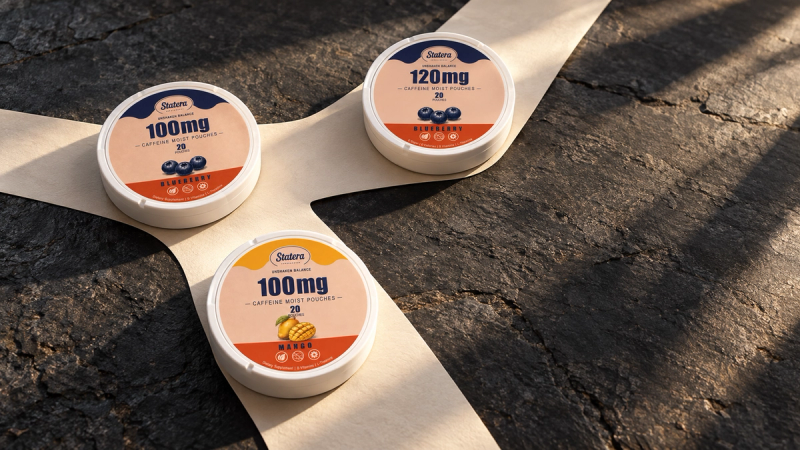
Caffeine Pouch Strength vs Flavor: What Should You Choose First?
Flavor catches the eye, but caffeine per pouch deserves the first decision. A practical way to compare STATERA strengths and flavors without confusing the two.
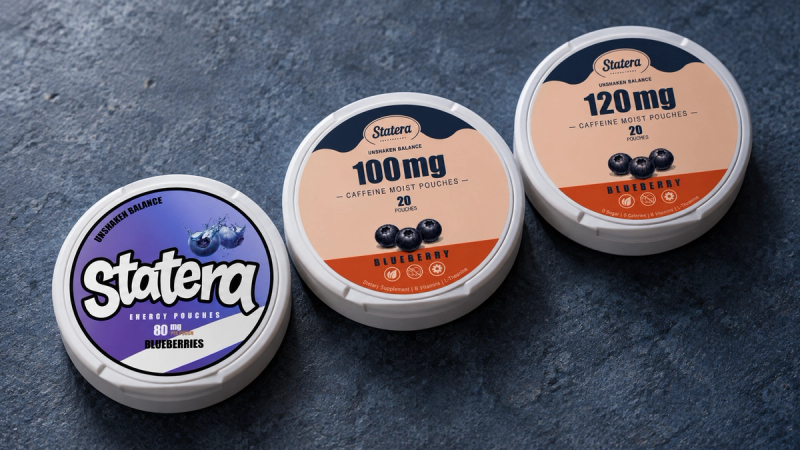
80mg vs 100mg vs 120mg Caffeine Pouches: How to Read the New STATERA Range
STATERA now has 80mg, 100mg and 120mg caffeine pouches. See the per-pouch math and why the numbers describe strength—not product quality or a one-size-fits-all ranking.
How to Store Caffeine Pouches After Opening
After opening a caffeine pouch can, keep it closed, cool and dry in its original container. Check the label, lot and expiry, and store it securely away from children and pets.