
Caffeine Pouch Strength vs Flavor: What Should You Choose First?
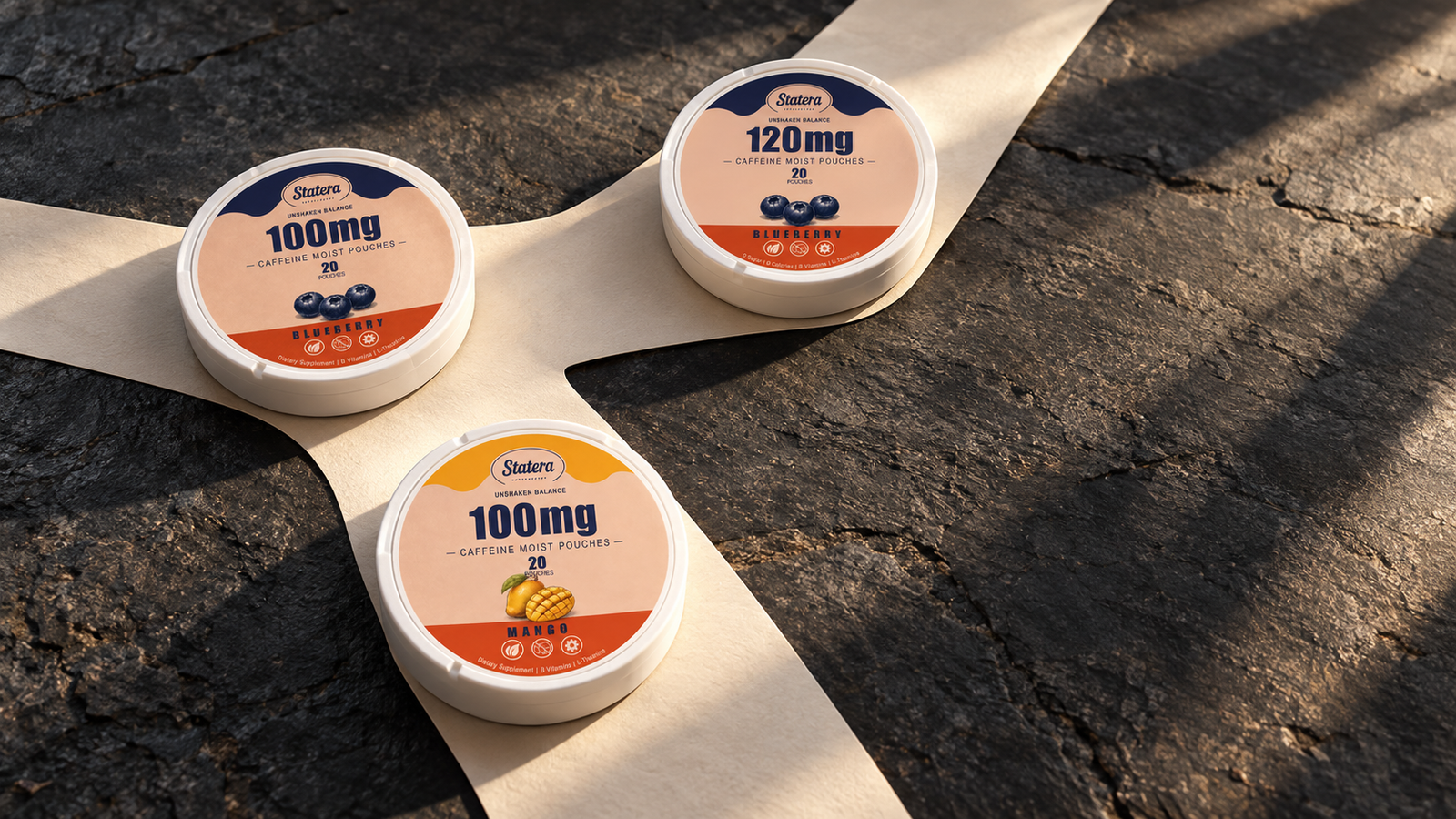
Choose the caffeine amount first. Then choose a flavor within that strength. Flavor may be the first thing you notice on a can, but it does not tell you how much caffeine is in the pouch. The milligram number does. Once that number fits the rest of your caffeine day, the taste decision becomes much simpler.
There is one exception to the order: if you already know which strength you are looking for, go straight to the flavors available in it. The point is not to turn shopping into a ritual. It is to keep a good-looking flavor name from making the caffeine decision for you.
Flavor gets the first glance
Blueberry. Mango. Peppermint. Those words are easier to imagine than a number. A color and a familiar taste can also make two cans feel more different than they really are—or more alike than they really are.
Look at STATERA’s current 100mg Blueberry and 120mg Blueberry products. The flavor name stays the same. The caffeine amount per pouch changes by 20mg. That is a strength decision hiding inside what looks, at a glance, like one flavor choice. The dedicated 100mg vs 120mg comparison goes through the two labels in detail; here, the useful point is the order in which you read them.
Now put 100mg Mango beside 100mg Blueberry. The flavor changes; the stated caffeine amount does not. This is the cleaner moment to ask what you actually want to taste.
The number needs the longer look
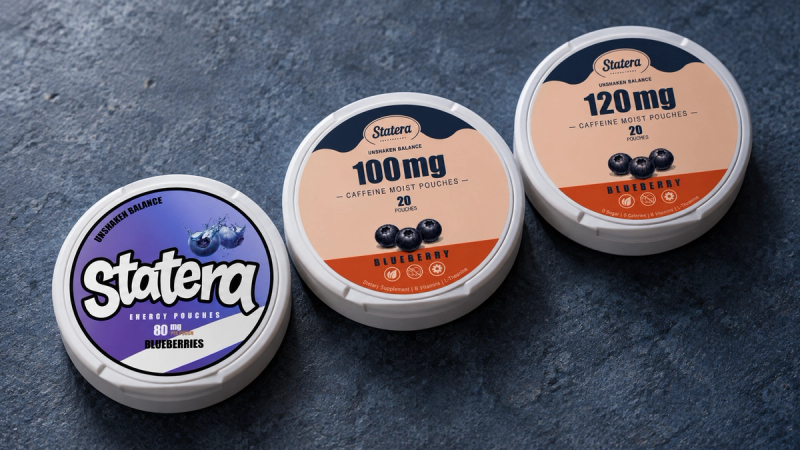
STATERA currently shows 80mg, 100mg and 120mg caffeine-pouch options. Each number refers to caffeine per pouch. It is not a quality grade, and the middle number is not a default for every adult. The three-strength range guide is the map if you need to see those amounts together.
Before selecting one, consider other caffeine you have already had or expect to have. Coffee, tea, energy drinks and pre-workout products can all contribute. The U.S. FDA’s consumer guidance notes that people differ in caffeine sensitivity and should consider caffeine from all sources. It cites 400mg per day as an amount not generally associated with negative effects for most adults—not as a target to reach, and not as a personal recommendation.
For STATERA, read the exact can and its directions. If the caffeine amount is not suitable for you, an appealing flavor is not a reason to treat that number as optional. If you need to think through the amount itself, use the strength-selection guide before comparing tastes.
Then compare flavors inside that strength
Once the strength question is settled, flavor deserves its own attention. A 100mg Blueberry pouch and a 100mg Mango pouch are not the same taste experience, even though the large caffeine number matches. This is where preference belongs: not as a substitute for reading the amount, but as a way to choose among options that already meet your criteria.
Check the current product pages rather than assuming every flavor exists at every strength. STATERA’s listed range can change, and older packaging may look different from newer cans. The label guide helps you verify the exact product name, caffeine per pouch, ingredients and directions before using it.
A quick shelf-side sequence is enough:
- Read the caffeine milligrams per pouch.
- Account for caffeine from the rest of your day and check the product warnings.
- Among the options at a suitable strength, compare the flavors actually available.
- Before use, recheck the can you picked up; similar-looking packages can carry different numbers.
If the flavor you want is only at another strength
This is the part a neat decision tree tends to hide. Suppose you came for one flavor but find it only in a caffeine amount you did not plan to choose. You do not have to make that trade. Pick a different flavor within the strength you are considering, or leave the purchase for another time.
That is not a rule that taste never matters. It matters quite a lot if you are going to use the product. It simply comes after the caffeine amount because flavor cannot change the number printed on the label.
Strength first. Flavor second. Then the exact can, once more, before you use it. A few extra seconds with the label can prevent a choice based only on color or a familiar fruit name.
STATERA caffeine pouches are intended for adults only and are not recommended for children, pregnant or nursing women, or people sensitive to caffeine. Follow the exact product directions and consider caffeine from all sources.
STATERA Editorial Team
—Content StrategyThe STATERA Editorial Team brings you insights on energy innovation, market trends, and wellness strategies for modern retailers and consumers.
Related Articles
80mg vs 100mg vs 120mg Caffeine Pouches: How to Read the New STATERA Range
STATERA now has 80mg, 100mg and 120mg caffeine pouches. See the per-pouch math and why the numbers describe strength—not product quality or a one-size-fits-all ranking.
How to Store Caffeine Pouches After Opening
After opening a caffeine pouch can, keep it closed, cool and dry in its original container. Check the label, lot and expiry, and store it securely away from children and pets.
Why Does a Caffeine Pouch Tingle?
A caffeine pouch can feel cool or tingly for several reasons. Learn how flavor and gum contact differ from caffeine absorption—and when to remove the pouch.