
100mg vs 120mg Caffeine Pouches: What Actually Changes?
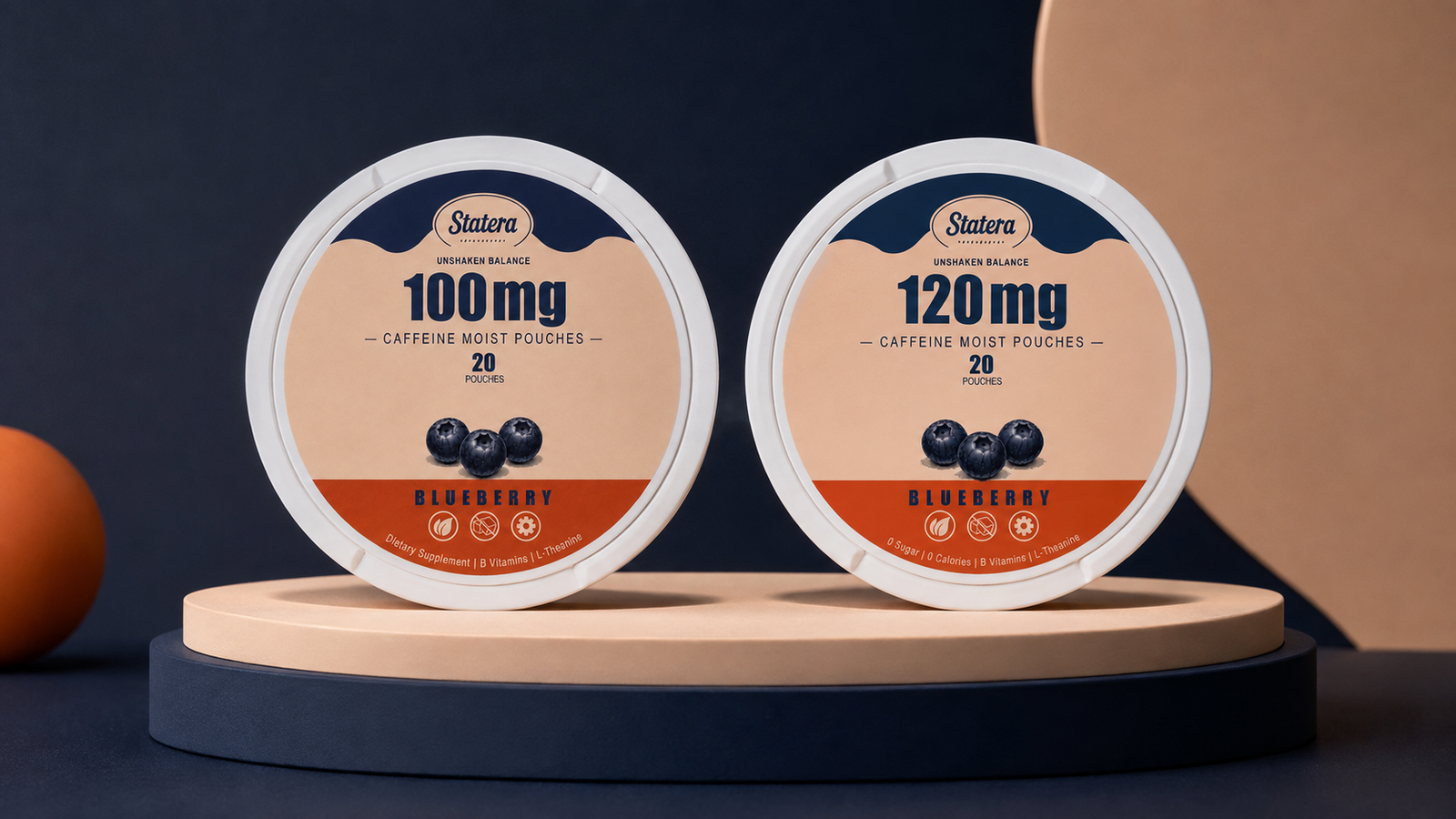
Twenty milligrams. That is the obvious difference.
A STATERA Blueberry 100mg can and its 120mg counterpart sit side by side looking much the same because, in most of the ways a shopper sees first, they are. Same flavor name. Same round can. Same 20-pouch count.
Then the number interrupts the resemblance.
100mg vs 120mg caffeine pouches are separated by 20mg in each pouch. It is a small-looking gap on paper and a real 20% difference when measured from 100mg. The more useful question is not which number sounds more serious. It is how that label fits the rest of the caffeine already in the day.
Twenty Milligrams. That Is the Obvious Difference
There is no need to manufacture a longer list. The stated caffeine amount is the difference this comparison can establish cleanly: 100mg per pouch on one label, 120mg per pouch on the other.
That is 20mg more caffeine in the 120mg pouch. Nothing about the arithmetic makes one product automatically better, safer, or right for every adult. It simply gives the comparison a number that can be read without translating marketing language.
The newer STATERA 100mg launch article explains where the additional strength sits in the broader range. This page stays narrower: two labels, one difference, and what to do with that information.
The Math Is Small Enough to See
Start with 100mg. Add 20mg. You arrive at 120mg.
Measured against the 100mg pouch, that increase is 20%: 20 ÷ 100 = 0.20. The calculation is straightforward, but it is often clearer than phrases such as “stronger” or “extra strength,” which do not tell a shopper how much caffeine is actually in one pouch.
100mg — ██████████
120mg — ████████████
Twenty milligrams is not a whole day. It is one pouch. Someone who has had no other caffeine is making a different calculation from someone who started with coffee, took an energy drink at lunch and now notices the can in the afternoon. The label gives the unit. The rest of the day gives the context.
What the Current Blueberry Labels Show
The clearest like-for-like example is Blueberry. Both current products are 20-pouch cans. The caffeine amount is the number that changes.
| Detail | 100mg Blueberry | 120mg Blueberry |
|---|---|---|
| Caffeine per pouch | 100mg | 120mg |
| Difference from 100mg | — | +20mg |
| Relative difference | Baseline | 20% higher |
| Current can count | 20 pouches | 20 pouches |
| Product page | View 100mg Blueberry | View 120mg Blueberry |
| Formula, directions and front-of-pack claims | Read the exact 100mg label | Read the exact 120mg label |
The can count makes the two examples easy to line up. It does not turn two labels into one. A formula, direction or front-of-pack claim should be read where it appears, on the product in hand.
Same Flavor Name, Separate Label
Blueberry tells you the flavor. It does not replace the strength line.
That sounds almost too plain to say, until a shelf or product grid puts two nearly matching cans beside each other. Read the milligrams per pouch first. Then read the rest of the exact label. The STATERA label guide is useful when the comparison moves beyond the large front-of-pack number.
That small pause at the shelf is worth making. Color, flavor and family design catch the eye first. The caffeine number is where the comparison starts.
Read the Number Before the Marketing
The 20mg difference belongs inside a larger caffeine picture. Coffee, tea, energy drinks, pre-workout and other products can all contribute. The U.S. FDA’s caffeine consumer guidance notes that individual sensitivity and total caffeine from all sources matter when people assess their own intake.
For a broader decision, use the STATERA caffeine pouch strength guide and the exact product label in front of you.
STATERA products are intended for adults only and contain caffeine. Individual responses to caffeine vary. Review the product label and consider caffeine from all sources before use.
STATERA Editorial Team
—Content StrategyThe STATERA Editorial Team brings you insights on energy innovation, market trends, and wellness strategies for modern retailers and consumers.
Related Articles
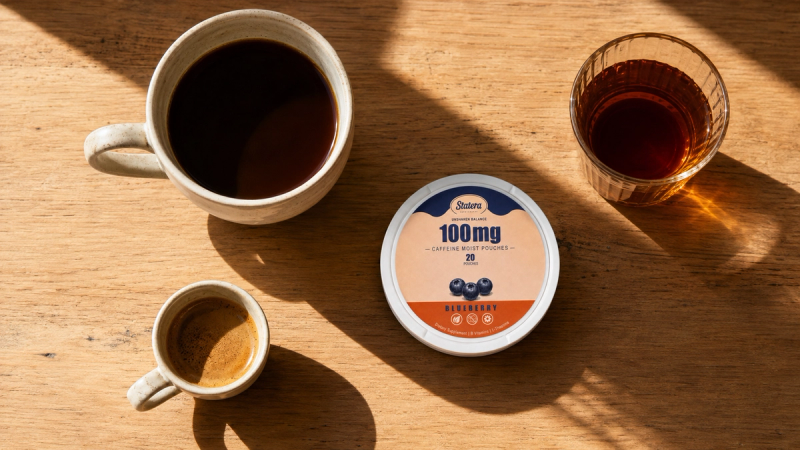
Is 100mg of Caffeine a Lot? Putting the Number in Context
See how 100mg compares with specific servings of coffee, espresso, tea and energy drinks—and why portion size, timing and sensitivity matter.
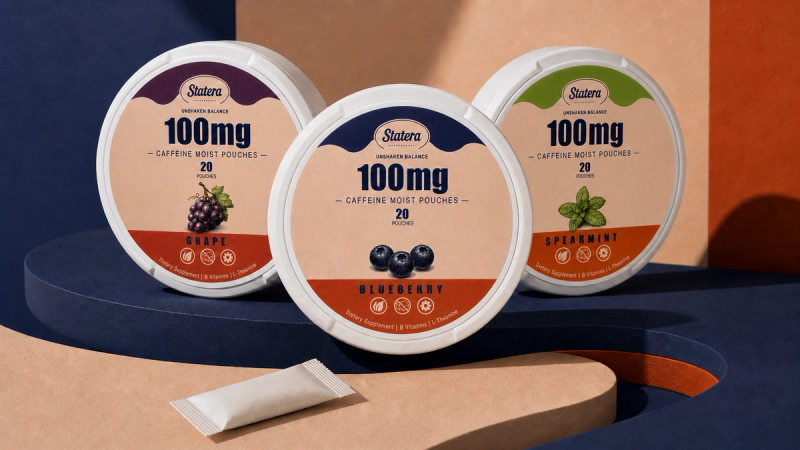
Introducing STATERA 100mg Caffeine Pouches
STATERA adds 100mg caffeine pouches to its strength lineup, creating a clearly labeled option between the existing 80mg and 120mg ranges.
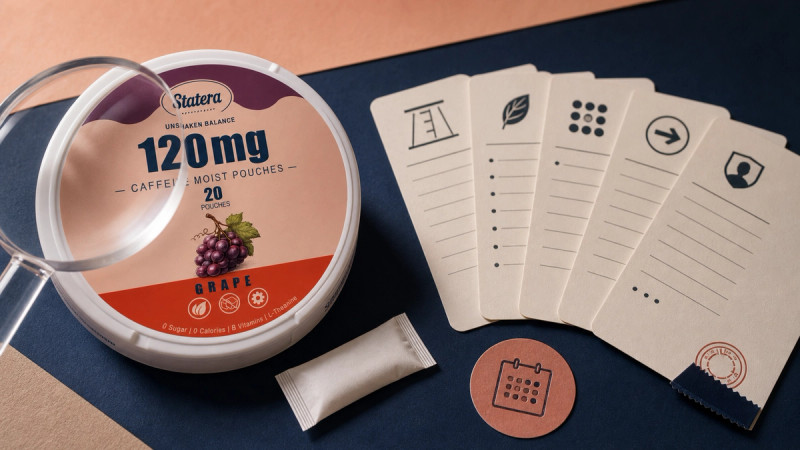
How to Compare Functional Pouch Formulas Beyond Caffeine Strength
Caffeine strength is the first comparison, not the last. Use a practical formula ledger to compare ingredient roles, disclosed amounts, source language and label clarity.