Is 100mg of Caffeine a Lot? Putting the Number in Context
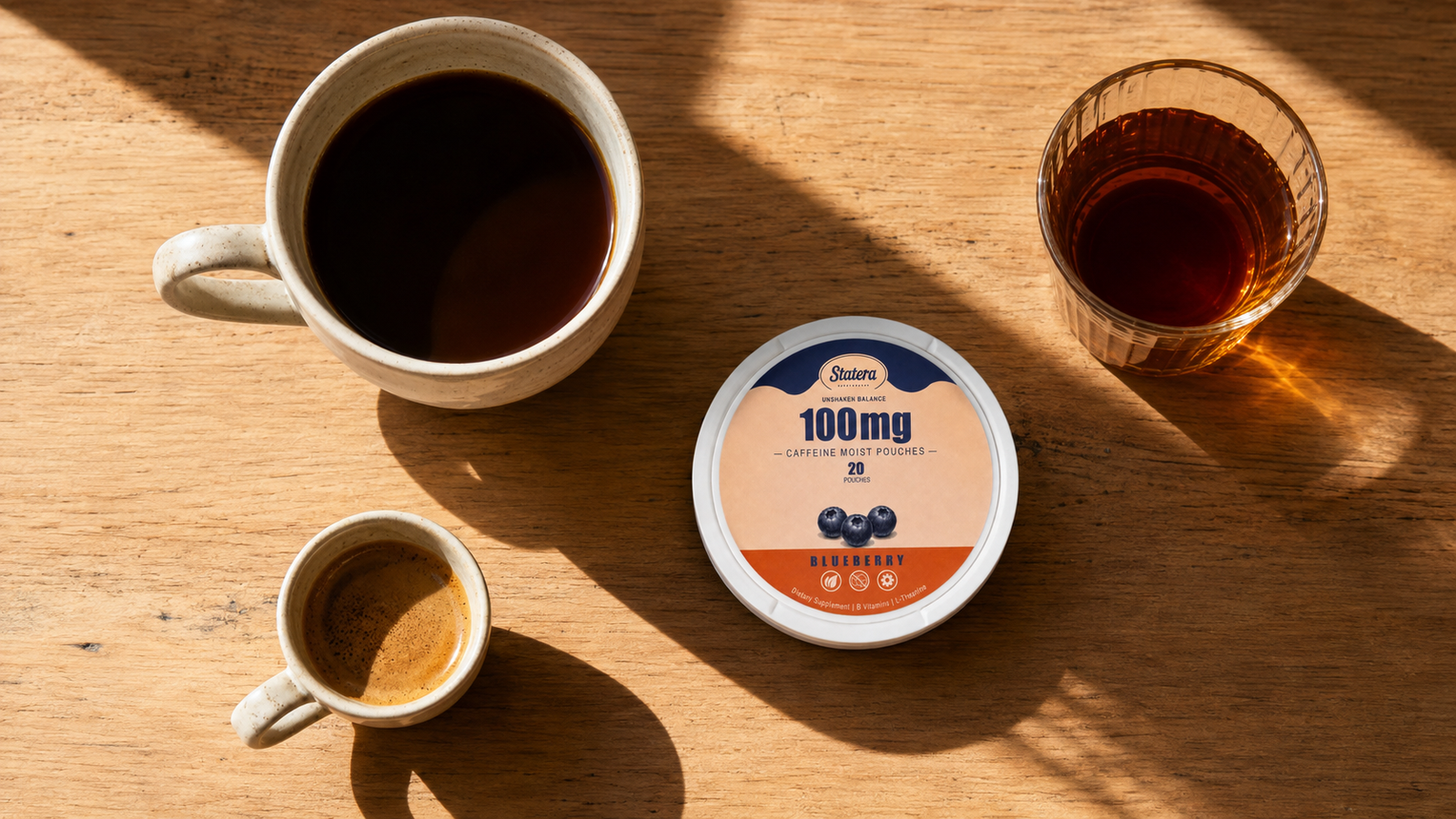
100mg is a meaningful amount of caffeine, close to some servings of coffee and above many servings of tea. It can be too much for someone who is sensitive to caffeine, especially near bedtime. Whether it is a lot for you depends on the portion, timing and other caffeine in the day.
The awkward part is the comparison people usually reach for: “about a cup of coffee.” Which cup? A small filter coffee and a large café order are both coffee. They are poor substitutes for a number.
A Cup Needs a Size
Put a serving size beside each drink and the comparison becomes more useful. The figures below are reference examples, not a ranking of products or a claim that every drink in a category contains the same amount.
| Source / portion | Caffeine |
|---|---|
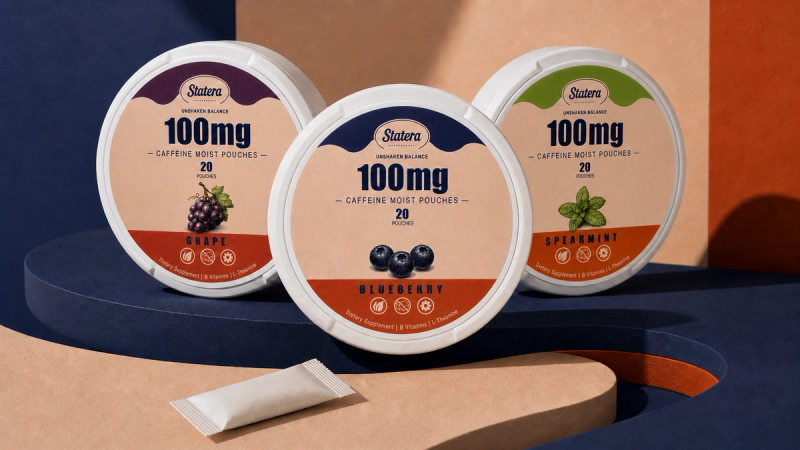
| STATERA 100mg pouch 1 pouch | 100mg |
| Filter coffee 200mL | About 90mg |
| Espresso 60mL | About 80mg |
| Black tea 220mL | About 50mg |
| Brewed coffee* 355mL / 12 US fl oz | 113–247mg |
| Energy drink* 355mL / 12 US fl oz | 41–246mg |
Sources: EFSA’s approximate beverage examples for filter coffee, espresso and black tea; FDA’s U.S. beverage reference ranges for the starred rows. The FDA coffee example is regular brewed, non-specialty coffee. The pouch figure comes from the current STATERA Blueberry 100mg product label. Beverage amounts vary with the product and preparation.
There are two coffee rows on purpose. Choosing only the larger reference would make 100mg look relatively small. Choosing only the smaller one would make it look larger. Both comparisons need their portion attached.
The range for energy drinks crosses 100mg in both directions. So “less than an energy drink” is not a useful blanket description either. The specific drink decides the comparison.
The Espresso Problem
A small cup can look like a small amount. Espresso shows why volume and caffeine deserve separate columns.
In the example above, 60mL of espresso contains roughly 80mg of caffeine, while 200mL of filter coffee contains roughly 90mg. Much less liquid; a fairly close caffeine amount. Calling that espresso example “one shot” would introduce another assumption, because shot sizes differ.
You could divide 100 by one of these reference figures and get a coffee-equivalent number. The arithmetic would be correct for that example. Printing it as a universal equivalence would be misleading.
For STATERA, the useful fixed reference is the labeled amount per pouch. The current Blueberry 100mg can contains 20 pouches; 100mg refers to each pouch, not the whole can. Our label-reading guide covers the other package details. Here, the important distinction is simply unit versus container.
100mg Near Bedtime Is Still 100mg
The beverage table answers a quantity question. It cannot tell you how well you will sleep.
EFSA notes that a single 100mg amount may affect sleep duration and patterns in some adults, particularly close to bedtime. That observation concerns caffeine; it is not a clinical test of a STATERA pouch or a prediction of your response.
This is where “not much compared with my coffee” can become the wrong judgment. A comparison with a bigger number does not make the smaller one irrelevant. If sleep is the concern, the clock deserves attention alongside the label.
What the 400mg Reference Actually Answers
The FDA cites 400mg per day as an amount generally not associated with negative effects for most adults. It also emphasizes differences in sensitivity and how quickly people eliminate caffeine.
That is population-level context, not a daily goal or a personal pouch allowance. Being below a general reference does not establish that another serving suits you.
Count caffeine from drinks, pouches and other sources together. If you are pregnant, trying to become pregnant, breastfeeding, taking medication or managing a medical condition, ask a qualified healthcare professional whether and how to limit caffeine.
So, is 100mg of caffeine a lot? It belongs in the same numerical conversation as familiar coffee servings, but “familiar” is not a suitability test. Read the actual portion and give your own circumstances more weight than a neat equivalence.
If your next question is specifically about the STATERA range, the 100mg vs 120mg comparison covers those two labels. Choosing a format is a separate question again; our coffee and caffeine pouch format comparison looks beyond the milligrams.
STATERA caffeine pouches are intended for adults only. Follow the product label and directions. This article provides general information, not personal medical advice.
STATERA Editorial Team
—Content StrategyThe STATERA Editorial Team brings you insights on energy innovation, market trends, and wellness strategies for modern retailers and consumers.
Related Articles
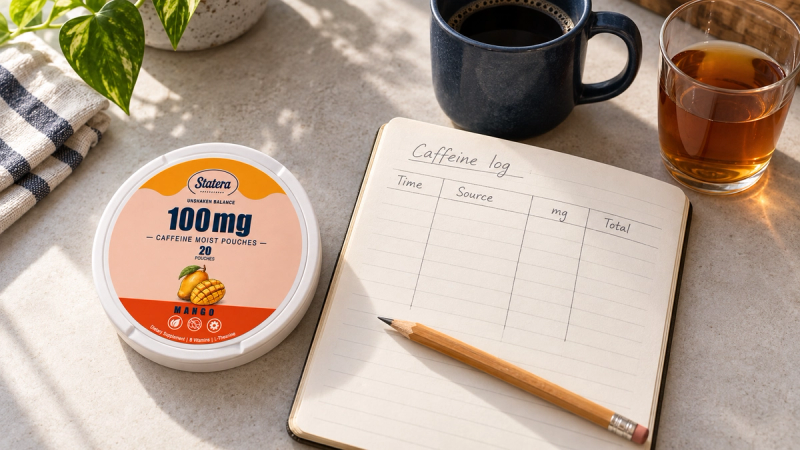
How Much Caffeine Did You Actually Have Today?
Track caffeine from coffee, tea, energy drinks and pouches with a simple daily log. Keep portion sizes, estimates and running totals visible.
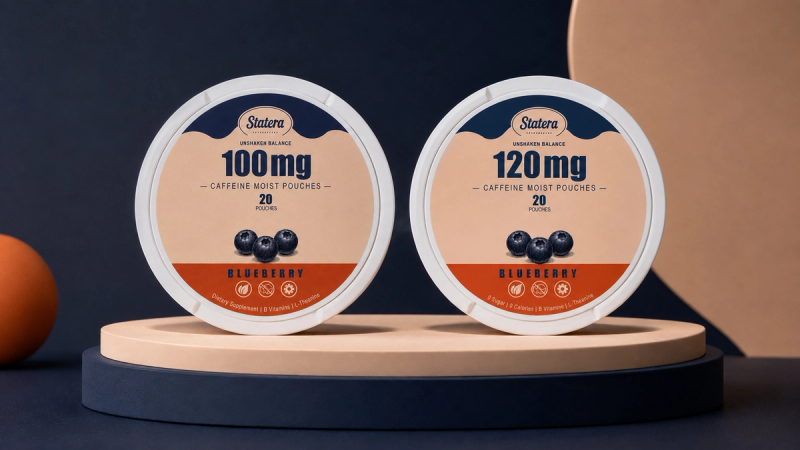
100mg vs 120mg Caffeine Pouches: What Actually Changes?
STATERA 100mg and 120mg caffeine pouches differ by 20mg per pouch. See the math, the current product labels and what to compare next.
Introducing STATERA 100mg Caffeine Pouches
STATERA adds 100mg caffeine pouches to its strength lineup, creating a clearly labeled option between the existing 80mg and 120mg ranges.