
How to Compare Functional Pouch Formulas Beyond Caffeine Strength
Key Takeaways
- Caffeine per pouch is the first common unit, but it does not describe the complete formula.
- An ingredient being named and its amount being disclosed are two different label facts.
- Compare ingredients by role before comparing the length of two ingredient lists.
- The exact package should support the claims being made for that specific product.
The comparison begins after you find the caffeine amount per pouch.
That is also where many comparisons stop too early.
Two functional pouches can show the same caffeine number and still present meaningfully different formulas. One may disclose the amount of every highlighted ingredient. Another may name a supporting ingredient on the front but leave the buyer searching for context. One may use a short formula. Another may stack several familiar names into a longer list.
More ingredients do not automatically make the second formula more considered. A larger caffeine number does not settle the question either.
A useful comparison needs a small ledger.
Start With One Common Unit
Use caffeine per pouch as the first common denominator. Do not compare caffeine per pouch on one product with caffeine per package, per serving, or per day on another.
The distinction sounds obvious. Packaging can make it less obvious.
The FDA's serving-size guidance makes a useful general label-reading point: serving information and servings per container answer different questions. The same discipline helps with pouches. Strength describes one pouch when the label says “per pouch.” Pouch count describes how many portions are in the package. Neither number is a recommendation to use the whole package.
Then add caffeine from the rest of the day. Coffee, tea, energy drinks, gum, medications and other products can all contribute. The FDA's consumer caffeine guidance emphasizes both total intake and wide differences in individual sensitivity.
If the numbers are hard to locate, use the separate caffeine pouch label guide first. This article starts one step later: once the facts are visible, how should two formulas actually be compared?
Build a Formula Ledger
Put the two products side by side. For every ingredient highlighted on the front, write down five things:
- Name — What is the ingredient actually called?
- Role — Is it the stimulant, an amino acid, a vitamin, flavor, sweetener or part of the pouch base?
- Amount — Is a quantity disclosed for that ingredient?
- Basis — Is the amount per pouch, per serving or per package?
- Location — Is the fact on the main label, the ingredient statement, another panel or only in marketing copy?
This takes longer than comparing two large numbers. Usually less than a minute longer.
It also prevents several weak shortcuts. A long ingredient list is not automatically a strong formula. A botanical-sounding caffeine source is not a dose. A front-panel badge is not the same thing as an amount. And an ingredient mentioned in advertising should still be traceable to the product information for the package in your hand.
Presence and Amount Are Different Facts
Suppose both formulas mention L-theanine. One label states an amount. The other only names the ingredient.
Those are not equivalent disclosures.
The same applies to vitamin B6, caffeine or any other highlighted formula component. “Contains” answers whether an ingredient is present. A number answers how much the label declares. Neither should be invented from packaging colors, ingredient order or a different product in the same range.
For U.S. packaged foods, the FDA explains that an ingredient list generally runs in descending order by weight. That can help a reader understand the structure of a list, but it still does not reveal an exact milligram amount for an ingredient when the label does not provide one. This is a general label-literacy principle, not a statement about STATERA's regulatory classification.
STATERA's formula overview separates caffeine, L-theanine, vitamin B6, flavor and the pouch format for the same reason. They are different parts of the product. They should not collapse into one vague “energy blend.”
Sort Ingredients by Job Before Counting Them
Caffeine is the stimulant in the formula. L-theanine is an amino acid. Vitamin B6 is a vitamin. Flavor and the pouch base do different work again.
Different ingredient. Different question.
When two labels are being compared, group like with like. Compare caffeine amount with caffeine amount. Compare whether L-theanine is present and whether its amount is disclosed. Compare the form and amount of vitamin B6 shown on each label. Then compare flavor, sweetener and pouch-base details separately.
This is more useful than counting ingredient names and declaring the longer list the winner. It also keeps research claims attached to the ingredient and amount actually studied. The separate articles on caffeine with L-theanine and vitamin B6 in functional formulas explain why those ingredients should not be treated as extra caffeine.
Watch for Caffeine Being Described Twice
A label may use source language—such as natural caffeine—or name an ingredient that contributes caffeine. That wording still needs a number.
First ask whether the package gives total caffeine per pouch. Then check whether every caffeine-bearing component is already included in that total. If the relationship is unclear, do not add or subtract amounts by assumption. Ask the manufacturer.
The distinction between source and quantity matters here. Natural caffeine language describes where caffeine may come from; it does not turn one amount into another or make the strength lower.
This is also why caffeine from outside the pouch belongs in a separate daily total. Formula comparison and intake tracking meet at the same number, but they are not the same task.
Make the Claim Fit the Disclosure
Now look at the words surrounding the formula.
Claims such as zero sugar, zero calories or zero nicotine can be checked against product-specific information. Broad promises about focus, absorption, crashes or universal suitability require much more than a crowded front label.
The useful question is not “Which can sounds more advanced?” It is “Which statements can I connect to a clear product fact?”
That standard works in both directions. A short formula can be well disclosed. A complex formula can be well disclosed too. The problem is not complexity. It is the gap between what the package appears to promise and what the buyer can actually verify.
One STATERA Example
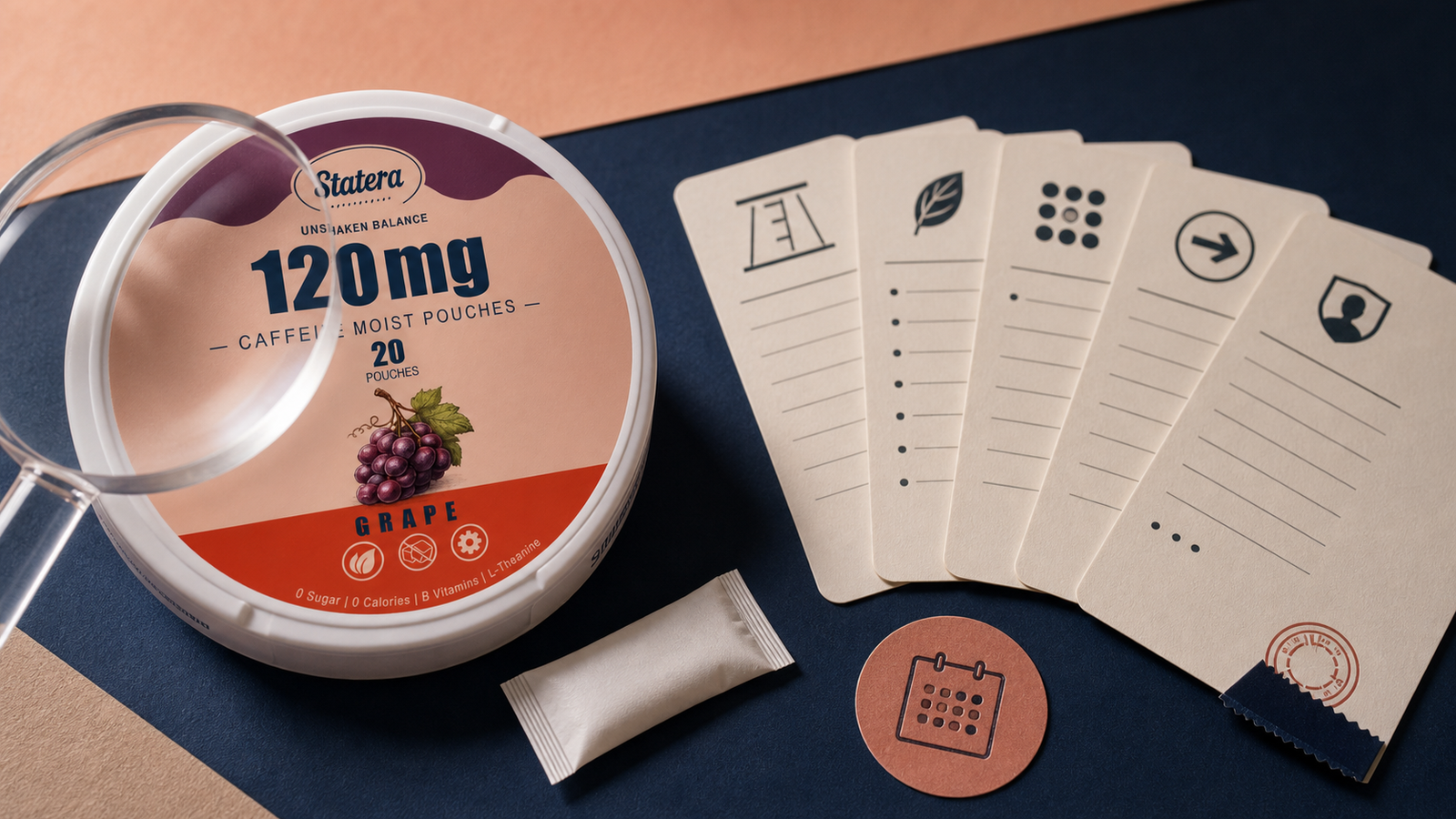
The current STATERA 120mg can gives several facts immediately: 120mg of caffeine per pouch, 20 pouches per can, caffeine with L-theanine and vitamin B6, and zero sugar, zero calories and zero nicotine. The exact flavor and full package information still matter. Front-of-can facts are the beginning of the ledger, not a substitute for reading the complete label.
The method is not tied to 120mg. Whether a functional pouch shows 80mg, 100mg, 120mg or another amount, start again with that exact package. Do not carry a formula assumption from one strength, flavor or market version to another.
Adults who want to inspect the current range can view the STATERA caffeine pouch collection, then compare the physical package they receive with the product information shown online.
The Better Formula Is the One You Can Actually Evaluate
There is no universal formula winner hiding behind the longest ingredient list.
Start with caffeine per pouch. Record the role and disclosed amount of every highlighted ingredient. Keep source language separate from dose. Check that the product claims stay close to facts the label can support.
Then make the comparison.
STATERA products are intended for adults only and contain caffeine. This article is provided for general informational purposes and does not replace professional medical advice. Individual responses to caffeine vary. Review the product label and consider caffeine from all sources before use.
STATERA Editorial Team
—Content StrategyThe STATERA Editorial Team brings you insights on energy innovation, market trends, and wellness strategies for modern retailers and consumers.
Related Articles
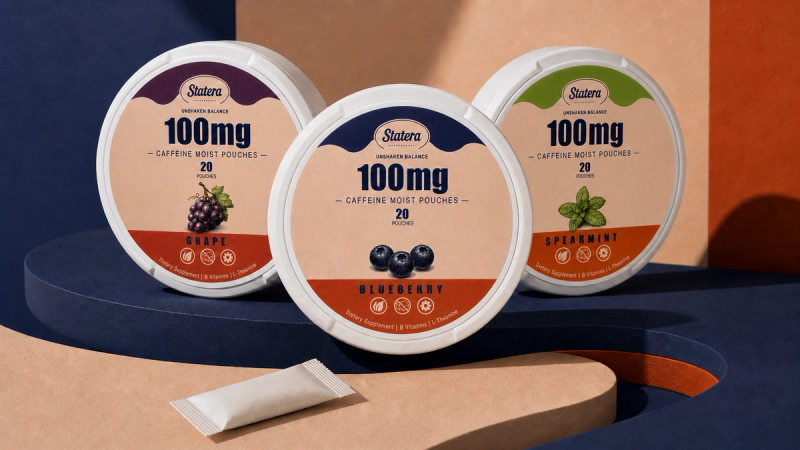
Introducing STATERA 100mg Caffeine Pouches
STATERA adds 100mg caffeine pouches to its strength lineup, creating a clearly labeled option between the existing 80mg and 120mg ranges.

From Drinks and Gummies to Functional Pouches: How Formats Are Evolving
Functional formats rarely replace one another. They accumulate, giving consumers different ways to prepare, carry, measure and use the products in their routines.
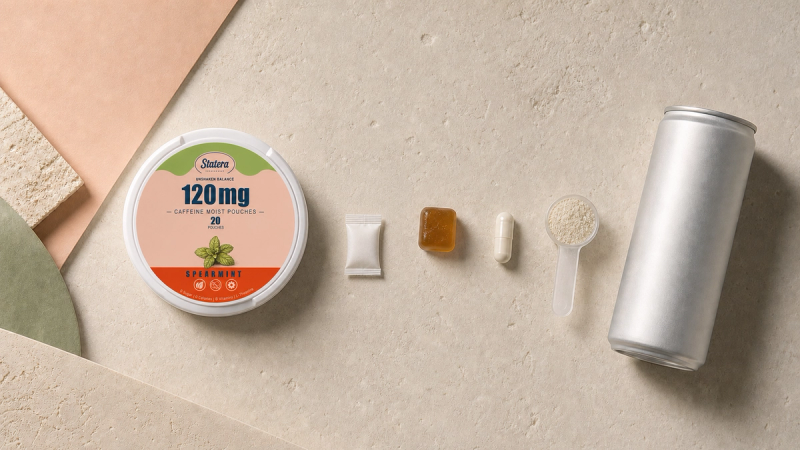
Functional Pouches vs Gummies, Capsules, Powders and Drinks
Functional formats can contain similar ingredients while asking the user to chew, swallow, mix, drink or follow pouch-specific directions. Here is the practical difference.