
Functional Pouches vs Gummies, Capsules, Powders and Drinks
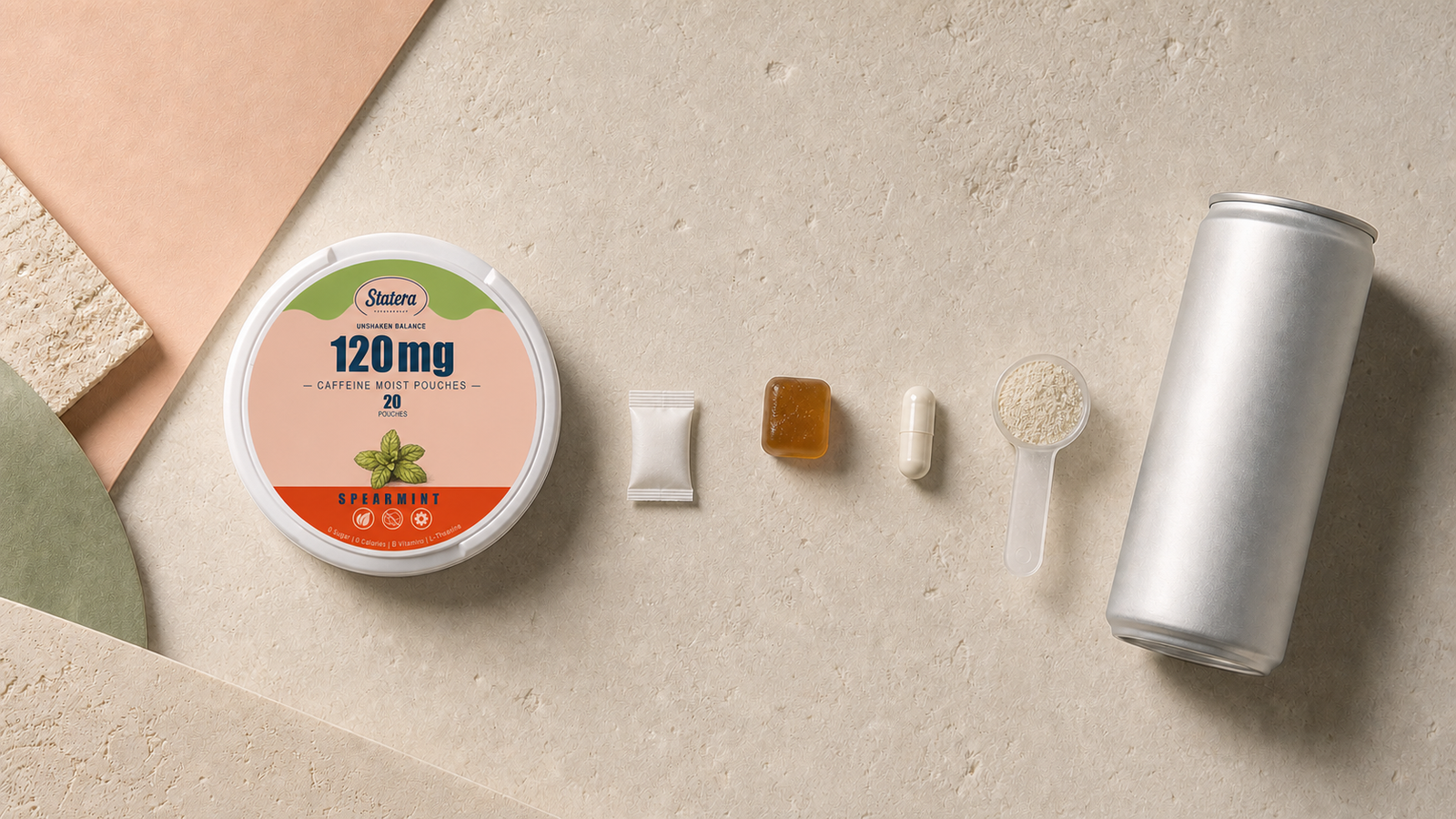
A pouch, a gummy, a capsule, a powder scoop and a drink can can all sit on the same desk. They do not ask the same thing from the person using them.
One is used according to pouch directions. One is chewed. One is swallowed. One is measured and mixed. One is already the drink.
That physical difference is the useful starting point when comparing functional pouches vs gummies, capsules, powders and beverages. It is not a health ranking, and it does not prove which product works faster or suits every person.
Start With the Action, Not the Ingredient
A product format describes how the product is packaged and used. It does not reveal the complete formula.
A gummy could contain caffeine, vitamins or neither. The same is true of capsules, powders and drinks. A functional pouch may also contain different active and inactive ingredients depending on the product.
That is why two products with very different shapes can contain similar ingredients, while two products with nearly identical shapes can have completely different formulas. Our guide to oral pouches and their possible ingredients explains that distinction in more detail.
Regulatory classification should not be guessed from appearance either. The FDA notes that dietary supplements may be sold in forms such as capsules, gummies, liquids and powders, but their intended use and labeling also matter. This comparison describes practical formats; it does not classify every product shown as the same type of regulated product.
Five Formats, Five Different Routines
The actual product directions always control. Still, the typical physical interaction provides a useful first comparison.
| Format | What the user typically does | Separate drink needed? | What to verify on the label |
|---|---|---|---|
| Functional pouch | Uses it in the mouth according to the product directions, then removes and disposes of it | No | Ingredients or caffeine per pouch, directions and warnings |
| Gummy | Chews it | No | Amount per gummy versus per serving, sugar, calories and directions |
| Capsule | Swallows it | Often taken with liquid | Amount per capsule versus per serving and directions |
| Powder | Measures and mixes it | Usually | Scoop or serving size, required liquid volume and mixing directions |
| Drink | Opens and drinks it | The product is the beverage | Amount per can or bottle versus per serving, caffeine, sugar and calories |
These are routine-level differences, not performance conclusions.
A pouch does not become better simply because it does not require mixing. A powder does not become less useful because it needs water. The meaningful question is whether the action, instructions and package fit the situation in which the product will actually be used.
The Package Changes the Experience
Portability is more than whether an item fits in a pocket.
A ready-to-drink beverage includes both the formula and its liquid container. That may be convenient when someone wants a prepared drink, but it also creates more package volume.
A powder separates the formula from the beverage. It may travel in a relatively small container, while actual use still requires liquid, measuring and something to mix it in.
Capsules and gummies package the formula into individual solid units. They can be compact, although users still need to check whether one unit equals one labeled serving.
A pouch also creates an individual unit and does not require a separate beverage during use. Storage, package closure, following the directions and responsible disposal still matter.
None of these packaging differences establishes potency, quality or health value. Our coffee and caffeine pouch format comparison applies the same practical approach to liquid and pouch-based caffeine routines.
Serving Labels Need a Common Denominator
Package counts are not serving amounts.
A bottle may contain more than one serving. A gummy serving may include multiple gummies. A powder scoop may or may not equal the serving described elsewhere on the package. A capsule product may state an amount per serving even when the serving contains more than one capsule.
For a pouch product, the most useful number is usually the labeled amount per pouch, followed by the number of pouches in the container and the directions for use.
Before comparing two formats, convert the label into a common question:
How much of the ingredient is present in the amount I would actually use?
The FDA explains that a serving size is not automatically a recommendation for how much someone should consume. It is a labeled reference amount. Our caffeine pouch label guide shows how to separate milligrams per pouch, pouch count and total package content.
Formula details matter too. A front label may emphasize one familiar ingredient while the complete ingredient list gives the fuller picture. See what is inside a STATERA caffeine pouch for a product-specific example.
A Practical Format Decision Path
There is no universal winner. A simple decision path can narrow the format before comparing brands and formulas:
- Want the product already prepared as a beverage? Start with a ready-to-drink format.
- Prefer measuring and mixing it into a chosen liquid? Consider a powder.
- Prefer a unit that is swallowed? Consider a capsule.
- Prefer a unit that is chewed? Consider a gummy.
- Prefer a removable portion used in the mouth according to its directions? Consider a functional pouch.
This is a format filter, not a recommendation about health, safety or effectiveness.
After choosing a format, the label still needs to answer the important questions: What ingredients are included? What is the amount per unit or serving? How many servings are in the package? Does it contain caffeine? Are sugar and calories relevant to that specific product? What directions and warnings apply?
Format cannot answer those questions by itself.
Where STATERA Fits
STATERA is one example within the functional pouch format.
STATERA caffeine pouches are compact, individually portioned and used without a separate beverage during use. They contain zero nicotine, zero sugar and zero calories. The current 120mg cans contain 20 pouches, with the caffeine amount labeled per pouch.
Those facts describe STATERA products. They should not be applied automatically to every pouch on the market.
Strength remains a separate decision from format. A compact package does not make caffeine disappear from a person’s total intake, and a larger number on the label is not automatically the right choice.
Adults considering STATERA can review the current 120mg caffeine pouch collection for product-specific labels, flavors and availability.
Sources and Adult Caffeine Note
The format and label guidance in this article was checked against the FDA’s resources on dietary supplement forms and labeling, serving sizes and caffeine intake.
Caffeine sensitivity varies. Count caffeine from every source rather than evaluating one product in isolation. STATERA caffeine products are intended for adults only and are not recommended for children, pregnant or nursing women, or individuals sensitive to caffeine. This article is general product education and does not replace professional medical advice.
STATERA Editorial Team
—Content StrategyThe STATERA Editorial Team brings you insights on energy innovation, market trends, and wellness strategies for modern retailers and consumers.
Related Articles
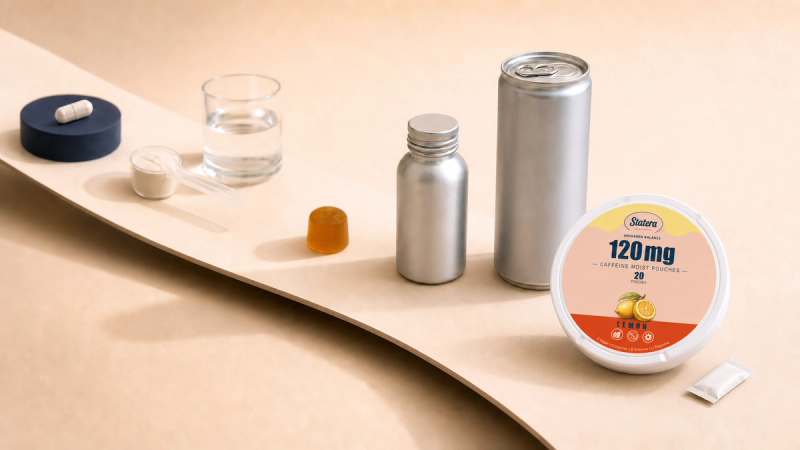
From Drinks and Gummies to Functional Pouches: How Formats Are Evolving
Functional formats rarely replace one another. They accumulate, giving consumers different ways to prepare, carry, measure and use the products in their routines.
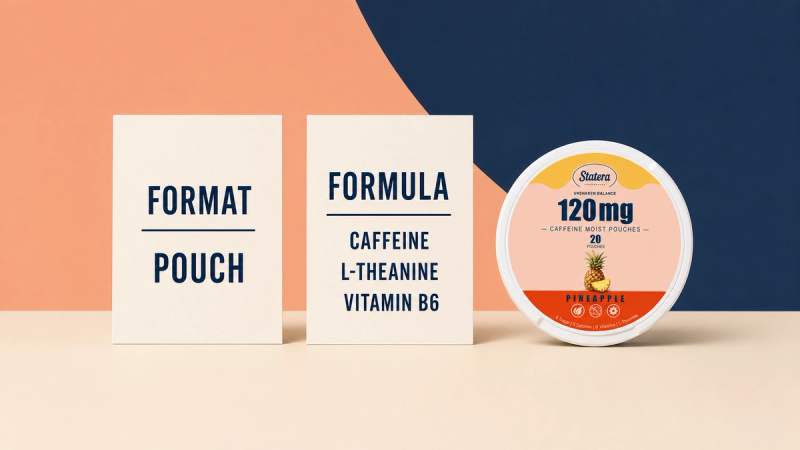
The Pouch Is a Format, Not an Ingredient List
Two oral pouches can look almost identical and contain very different formulas. Learn why the pouch describes a format while the ingredient list defines the product.
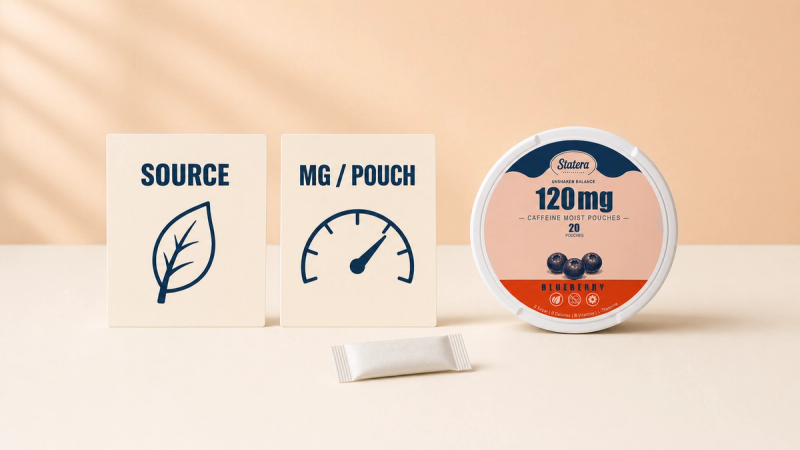
Natural Caffeine in Pouches: Reading Beyond the Front Label
“Natural caffeine” describes source language, not caffeine strength. Learn why source and dose are separate questions and which number still guides comparison.