
From Drinks and Gummies to Functional Pouches: How Formats Are Evolving
Key Takeaways
- Functional product formats generally accumulate rather than replacing every earlier option.
- Convenience can involve preparation, consumption, purchasing and storage—not just portability.
- Format alone does not reveal the complete formula, serving amount or regulatory identity.
- Functional pouches add a compact, removable, no-drink-required option with their own label and disposal requirements.
New formats rarely clear the old ones off the shelf.
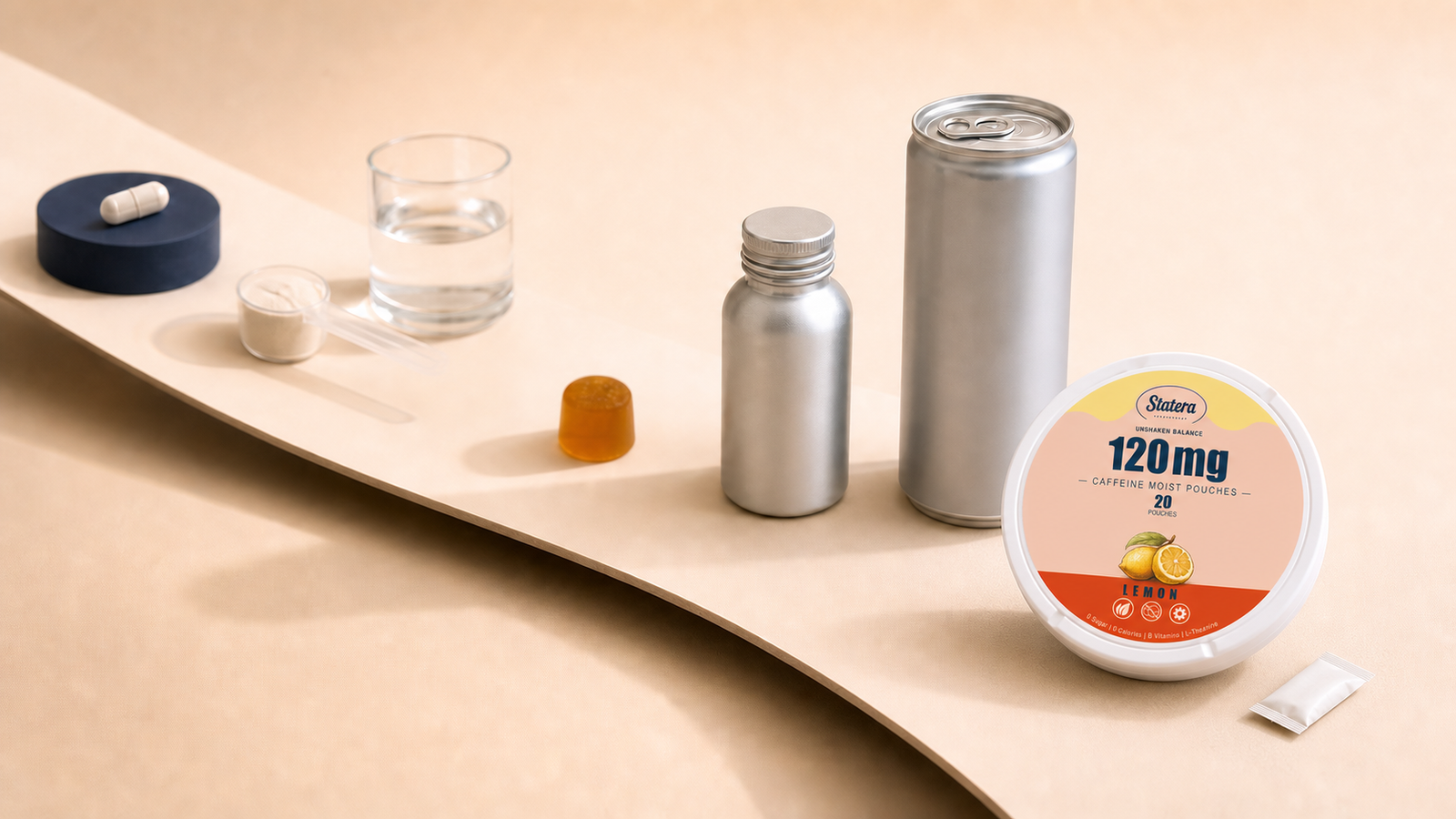
Capsules remain. Powders remain. Ready-to-drink products remain. Gummies arrived and stayed. Now gums, lozenges, strips and functional pouches are joining the same conversation.
That is the more accurate functional pouch trend: accumulation, not replacement. Each format changes what the user needs to carry, prepare, chew, swallow, drink, dissolve or remove. The formula still matters. But the physical experience has become part of the product decision.
Format Innovation Is Additive, Not Linear
A capsule and a beverage can contain some of the same familiar ingredients while creating completely different routines.
The capsule packages the formula into a swallowed unit. The beverage combines the formula with liquid and puts both inside one container. Powder leaves the mixing step to the user. Gummies bring taste and chewing into the experience. A pouch creates a small removable portion used according to its own directions.
One did not make the others obsolete.
The FDA’s overview of dietary supplement forms lists pills, tablets, capsules, gummies, softgels, liquids and powders as examples. That variety shows how many physical forms can exist around functional ingredients.
It does not mean every product in one of those shapes has the same regulatory identity. Classification depends on the specific product, intended use and labeling—not appearance alone.
A Timeline of Changing Use Questions
This is not a strict history in which one stage ended before the next began. The formats overlap. It is better understood as a sequence of product-design questions.
- Swallowed units. Tablets and capsules asked whether ingredients could be placed into a compact, labeled unit. They created new questions about serving count, swallowing and whether one capsule equals one serving.
- Mixable formats. Powders separated the formula from the finished drink. The user could mix the product into a selected liquid, but measuring, water volume, mixing and cleanup became part of the routine.
- Ready-to-drink products and shots. Beverages removed the preparation step. Shots reduced the liquid and package volume compared with a full-size drink, while still requiring the user to understand whether the bottle represents one serving.
- Chewable and dissolving formats. Gummies, gums, lozenges and strips introduced different sensory experiences. They also introduced format-specific questions: Is it chewed? Does it dissolve? Is it removed? How many pieces make one serving?
- Functional oral pouches. A pouch adds a compact, removable format that can be used without preparing or carrying a drink. The package directions still need to explain placement, use time, removal, disposal and the amount in each pouch.
The useful change is not simply “smaller packaging.” It is the number of ways a product can now fit—or fail to fit—a routine.
Convenience Is More Than Portability
Convenience is often reduced to one claim: easy to carry.
Consumers describe it more broadly.
The 2025 IFIC Food & Health Survey found that, among respondents who said convenience influenced their food and beverage purchases, 32% said ease of cooking or preparation had a great impact. Convenience to consume was cited by 29%, convenience to purchase by 28%, and convenience to store by 27%.
Those figures are not a ranking of functional products. They reveal four different jobs:
- How much preparation is required?
- How easy is the product to use?
- How easy is it to obtain?
- How much storage does it need?
A powder may be compact in storage but require preparation. A beverage removes preparation but carries its liquid volume with it. A gummy may be easy to consume while still requiring careful attention to pieces per serving.
The functional format comparison examines those practical differences in more detail. The trend article asks a different question: why do brands keep adding formats instead of choosing one universal answer?
What Each Format Is Trying to Solve
| Format shift | Use need it addresses | New question it introduces |
|---|---|---|
| Tablet or capsule | Compact, familiar unit | How many units equal one serving? |
| Powder | Mixable formula without carrying the finished drink | How should it be measured and mixed? |
| Ready-to-drink product | No preparation before drinking | Is the label per serving or per container? |
| Functional shot | Prepared liquid with less volume than a full drink | Does the bottle contain one or multiple servings? |
| Gummy, gum or lozenge | A chewable or dissolving sensory experience | Is it chewed, dissolved or removed—and how many pieces form a serving? |
| Functional pouch | Compact removable portion without a separate drink | What is present per pouch, and what do the placement and disposal directions say? |
No format solves every problem at once.
Removing preparation may increase package volume. Reducing package volume may reintroduce mixing. Making a product chewable changes the sensory experience and may change which label details matter most.
Format design is tradeoff design.
The Pouch Adds a Different Tradeoff
A pouch is not a smaller beverage. It is not a capsule with different packaging either.
It creates a different physical interaction: the portion is used in the mouth according to the product directions and removed afterward. No separate drink is required during use, while storage, placement, use time and disposal remain part of the experience.
That distinction is why the pouch format should be separated from its ingredient list. Two pouches may look similar while containing different ingredients or labeled amounts.
The label therefore carries more responsibility, not less. It should make the amount per pouch, package count, ingredients, directions and warnings understandable. The STATERA caffeine pouch label guide provides the complete reading sequence.
Compact does not mean self-explanatory.
What the Trend Does—and Does Not—Show
The broader functional-products market is still experimenting.
NielsenIQ’s June 2026 view of functional beverage trends identifies innovation in ingredients, formats and claims, alongside consumer expectations around transparency and convenience.
Innova Market Insights similarly describes supplement delivery systems as continuing to change, with convenience, concentrated formats and palatability influencing product development.
Neither source establishes that pouches will replace beverages, powders, capsules or gummies. They support a more restrained conclusion: the design space is expanding.
That distinction protects the useful part of the trend from marketing exaggeration. No unsupported market-size prediction is needed. No “fastest-growing” label is needed. The growing number of formats is already visible in the questions brands and consumers now need to answer.
Where STATERA Fits
STATERA represents one part of that expanding format landscape.
Current STATERA 120mg caffeine pouches package a labeled amount of caffeine into an oral pouch format. Each can contains 20 pouches, with zero sugar, zero calories and zero nicotine across seven flavor options. No separate beverage is required during use.
Those are product facts. They do not make the pouch format the automatic answer for every adult or every routine.
The more useful brand decision is clarity: identify the format, explain the formula and show the caffeine amount per pouch. The STATERA formula overview separates caffeine, L-theanine, vitamin B6, flavor and pouch format rather than treating them as one vague “energy” idea.
Adults who prefer this kind of format can review the current STATERA 120mg collection. The label remains the final product reference.
STATERA products are intended for adults only and contain caffeine. This article is provided for general informational purposes and does not replace professional medical advice. Individual responses to caffeine vary. Review the product label and consider caffeine from all sources before use.
STATERA Editorial Team
—Content StrategyThe STATERA Editorial Team brings you insights on energy innovation, market trends, and wellness strategies for modern retailers and consumers.
Related Articles
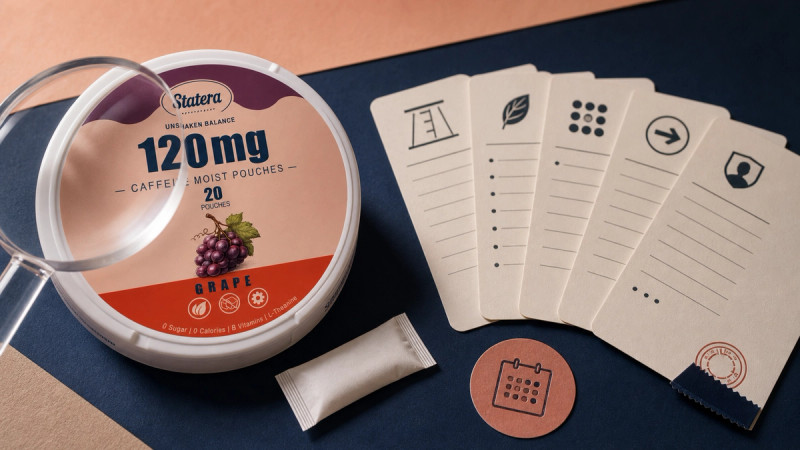
How to Compare Functional Pouch Formulas Beyond Caffeine Strength
Caffeine strength is the first comparison, not the last. Use a practical formula ledger to compare ingredient roles, disclosed amounts, source language and label clarity.
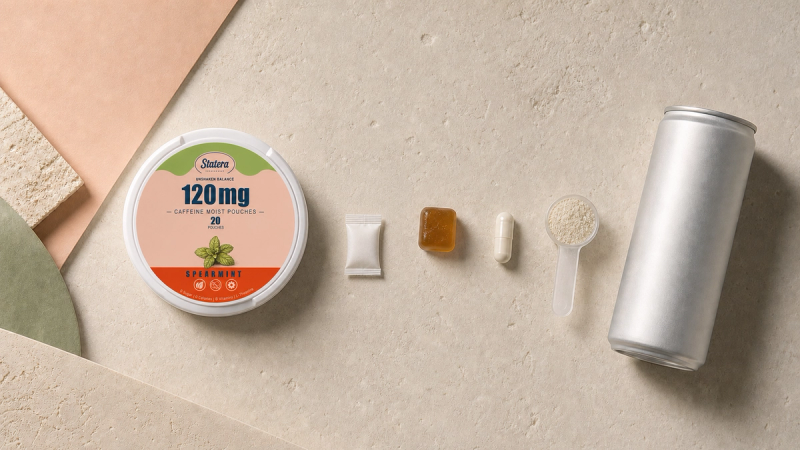
Functional Pouches vs Gummies, Capsules, Powders and Drinks
Functional formats can contain similar ingredients while asking the user to chew, swallow, mix, drink or follow pouch-specific directions. Here is the practical difference.
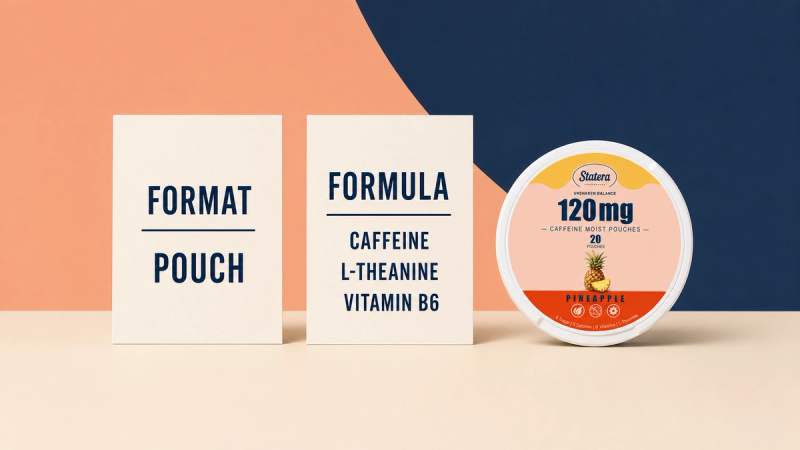
The Pouch Is a Format, Not an Ingredient List
Two oral pouches can look almost identical and contain very different formulas. Learn why the pouch describes a format while the ingredient list defines the product.