
Why Is Vitamin B6 Used in Functional Energy Formulas?
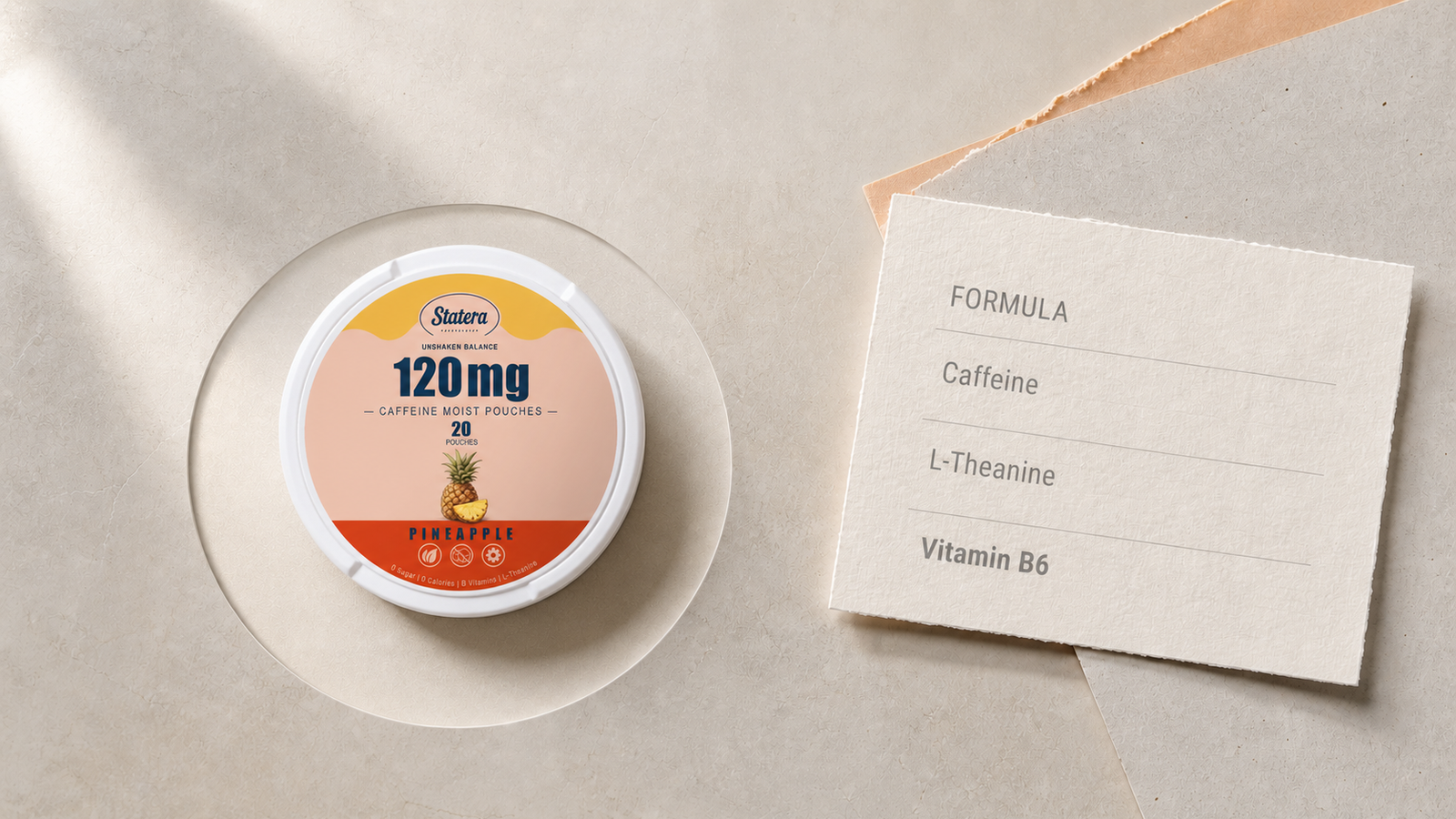
Vitamin B6 often sits beside caffeine on a functional-product label. That visual proximity makes the two ingredients look more alike than they are.
Caffeine is the stimulant in the formula. Vitamin B6 is a water-soluble vitamin involved in ordinary biological processes. It belongs in the conversation for a different reason.
Why Vitamin B6 Appears Beside Caffeine
Functional formulas bring several ingredient types into one small label. Some provide the product’s caffeine. Others contribute flavor, format, or a nutritional component. Vitamin B6 sits in that last group.
The NIH Office of Dietary Supplements fact sheet describes vitamin B6 as a family of related compounds with vitamin activity. Its coenzyme forms participate in many enzyme reactions, including reactions involving amino acids, carbohydrates, and lipids.
That is the useful answer. Vitamin B6 appears in a formula because it is a vitamin with a recognized nutritional role. It is not there to become a second caffeine source.
Metabolism Is a Biological Role, Not a Sensation
The word “metabolism” creates trouble when product copy turns it into a feeling.
A nutrient can participate in normal metabolic reactions without producing an immediate sensation that a person can isolate and name. The two ideas are not interchangeable. “Involved in metabolism” describes biology. A promised immediate performance change would be a separate product claim.
STATERA does not need that leap. The formula can be explained more clearly by letting each ingredient keep its own identity: caffeine as caffeine, L-theanine as an amino acid, and vitamin B6 as a vitamin.
The broader STATERA formula overview maps those categories. This page stays with one question: why B6 is there.
The Label Should Do More Than Name the Vitamin
“Contains vitamin B6” is a starting point. A useful label also identifies the relevant form and amount under the rules that apply to that product and market.
For U.S. label context, the FDA’s Daily Value guidance explains how Daily Values are used on Nutrition Facts and Supplement Facts labels. Other markets use their own formats and requirements.
The practical check is simple:
- Find the vitamin B6 form and stated amount.
- Keep that number separate from caffeine per pouch.
- Confirm that the information belongs to the exact strength and flavor in hand.
- Read the directions and warnings for that package.
The full caffeine pouch label guide covers the rest. There is no reason to rebuild the complete checklist here.
More Is Not the Story
Vitamin language can make a formula sound as if a larger number must be the more ambitious choice. Nutrition is not a scoreboard.
The NIH fact sheet discusses recommended intakes, upper limits, and interactions because the amount and the person both matter. That information should not be used to imply that a STATERA pouch contains a high amount when the available product information does not state one.
The editorial point is narrower. Naming a vitamin is useful. Showing its amount is better. Turning that amount into an unsupported promise adds nothing.
Where STATERA Fits
Current STATERA product information identifies caffeine, L-theanine, and vitamin B6 as separate parts of the formula. It does not publish them as three versions of the same ingredient.
That distinction is small, but it changes the quality of the explanation. The article about caffeine and L-theanine can focus on that research question. This page can focus on the vitamin. The current STATERA collection remains the place to check product-specific information.
A formula becomes easier to read when every ingredient is allowed to do one job in the sentence.
STATERA products are intended for adults only and contain caffeine. This article is provided for general informational purposes and does not replace professional medical advice. Review the product label and consider caffeine from all sources before use.
STATERA Editorial Team
—Content StrategyThe STATERA Editorial Team brings you insights on energy innovation, market trends, and wellness strategies for modern retailers and consumers.
Related Articles
Natural Caffeine in Pouches: Reading Beyond the Front Label
“Natural caffeine” describes source language, not caffeine strength. Learn why source and dose are separate questions and which number still guides comparison.

Why Pair Caffeine With L-Theanine?
Caffeine and L-theanine are different ingredients often studied together. Here is what researchers measured, what they found and what labels should confirm.
What's Inside a STATERA Caffeine Pouch?
A clear look at the STATERA caffeine pouch formula: caffeine, L-theanine, vitamin B6, flavor, pouch format and the facts each label should confirm.