
How Long Should You Keep a Caffeine Pouch In?
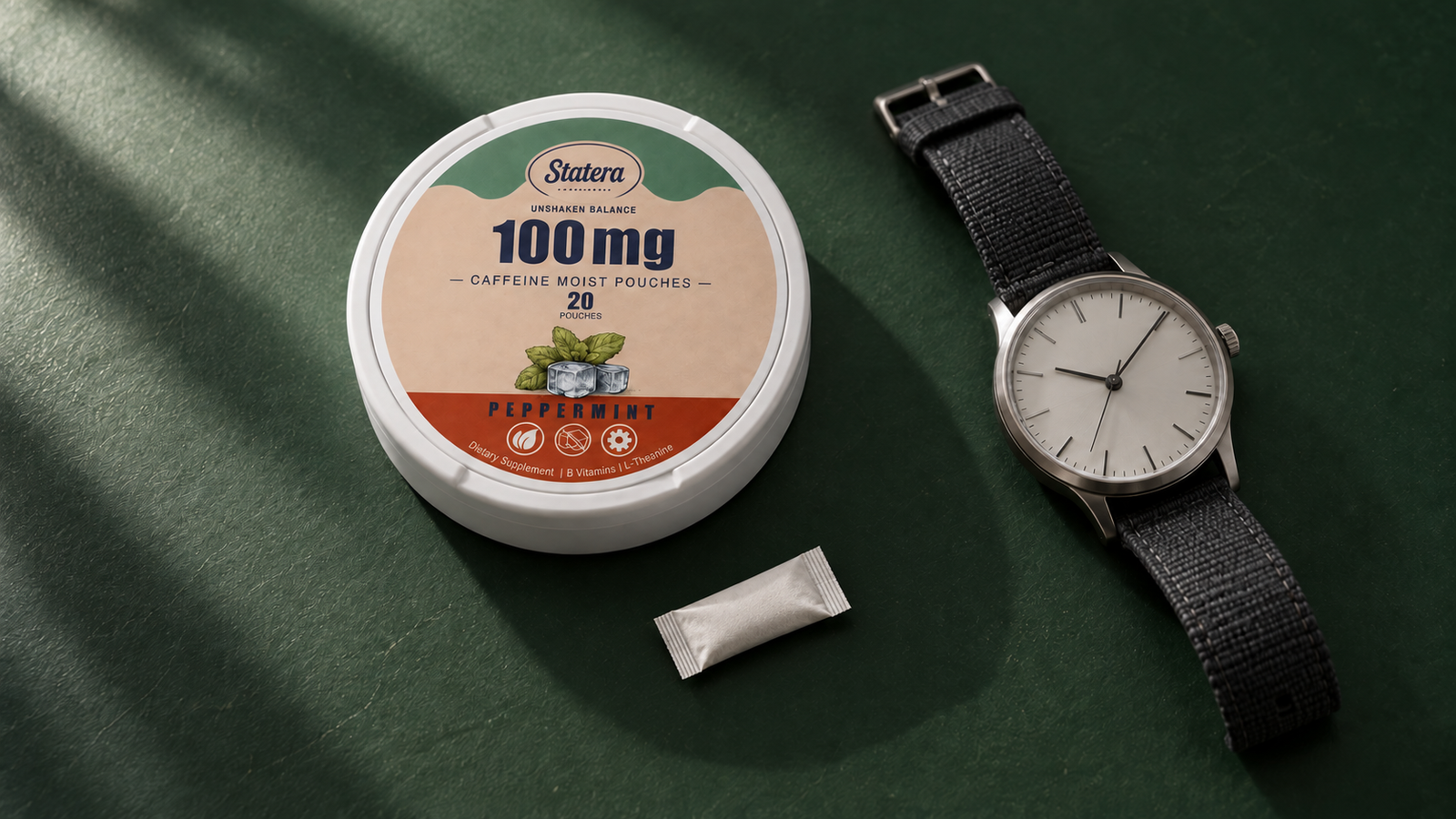
For STATERA’s current 100mg caffeine pouches, the website directions say up to 20 minutes, then remove and dispose of the pouch. Check the directions on your actual package before use. Other products may specify a different interval.
The two words worth noticing are “up to.” Twenty minutes is not a minimum you need to complete. And it is not a promise that caffeine stops affecting you when the pouch comes out.
“Up To” Leaves Room to Stop Earlier
The current STATERA Peppermint 100mg product page gives a straightforward instruction: place one pouch between the lip and gum, use it for up to 20 minutes, then remove it. That is the product-specific reference for this article, not a universal rule for caffeine pouches.
A watch or a simple reminder can help you avoid losing track. Use the package’s maximum as the stopping point, not as something to exceed because the flavor is still noticeable. A lingering taste does not revise the directions.
You can remove the pouch earlier. If it feels uncomfortable, do so rather than trying to finish the interval. Do not chew or tear it, and do not swallow the pouch. Our adult beginner’s guide covers placement and the basic handling steps; the question here is when to stop.
If the instructions on the can in your hand differ from the website, pause and check with STATERA before using it. Packaging versions can change. A general article should not overrule the exact product you have.
A Shorter Session Is Not a Smaller Labeled Strength
There is an appealing bit of mental math: if a pouch contains 100mg and the directions allow 20 minutes, ten minutes must mean 50mg.
That calculation is not supported by the label.
Milligrams per pouch describe the product’s caffeine content. Minutes describe how long it is kept in place. Turning one into the other would require product-specific release and absorption evidence, including whether the relationship is even linear. The use directions alone provide none of that.
Removing a pouch earlier does not establish a measured lower dose. Nor does reaching 20 minutes establish that exactly 100mg has entered your bloodstream. Those are different measurements, neither of which a watch can make.
For an intake record, keep the labeled amount attached to the pouch you used instead of subtracting an invented percentage. That is conservative label-based bookkeeping, not a claim of complete absorption. The daily caffeine tracking guide shows how to keep product amounts and estimates separate.
Taking the Pouch Out Does Not Reset the Clock
Pouch use time ≠ caffeine duration in the body.
One clock concerns an object in your mouth. The other concerns caffeine your body is processing. Removing the object ends that use session; it does not remove caffeine already absorbed.
CDC/NIOSH caffeine guidance describes a half-life of about five to six hours, while noting that caffeine can remain in the system much longer. Half-life refers to the time needed to eliminate half an amount, not all of it. This is general caffeine information, not a measured duration for STATERA pouches or an individual prediction.
That distinction matters most when bedtime is approaching. “I will take it out in twenty minutes” does not answer whether caffeine fits that part of your day. A short use interval cannot guarantee a short effect.
It also means the moment you remove a pouch is not automatically the right moment for another. The directions for a single session are not a repeat-use schedule. Consider earlier caffeine and your circumstances separately.
End the Session, Then Put the Can Away
Remove the pouch at or before the stated maximum and dispose of it responsibly, where children and pets cannot reach it. Close the can and follow its storage instructions. There is no need to keep a used pouch in place until every trace of flavor disappears.
If you experience irritation, stop use. Persistent discomfort deserves professional advice rather than a longer experiment with placement or time. The FDA’s caffeine guidance also lists symptoms of excess caffeine, including palpitations, anxiety and nausea. Stop adding caffeine if you feel unwell; seek prompt medical help for severe symptoms.
The practical answer stays small: read the exact directions, keep track of the interval, and remove the pouch when it is time—or earlier if uncomfortable. Use the label for product strength and the clock for use time. Neither replaces the other.
STATERA caffeine pouches are intended for adults only. They are not recommended for children, pregnant or nursing women, or people sensitive to caffeine. Ask a qualified healthcare professional about caffeine if you take medication or have a medical condition. This article provides general information, not personal medical advice.
STATERA Editorial Team
—Content StrategyThe STATERA Editorial Team brings you insights on energy innovation, market trends, and wellness strategies for modern retailers and consumers.
Related Articles
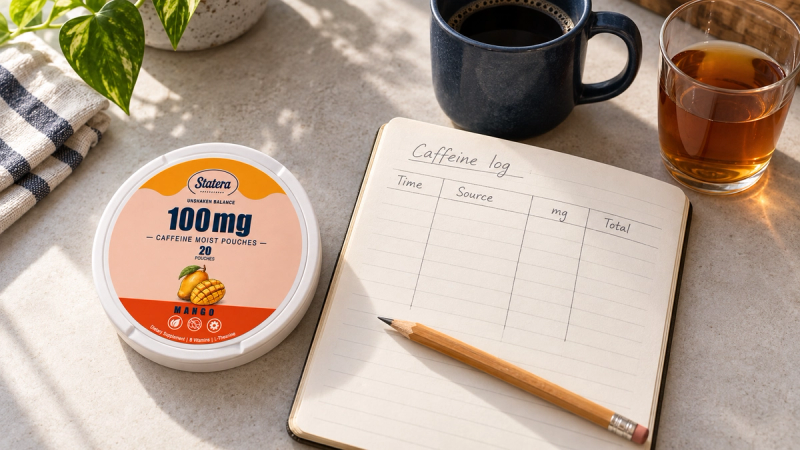
How Much Caffeine Did You Actually Have Today?
Track caffeine from coffee, tea, energy drinks and pouches with a simple daily log. Keep portion sizes, estimates and running totals visible.
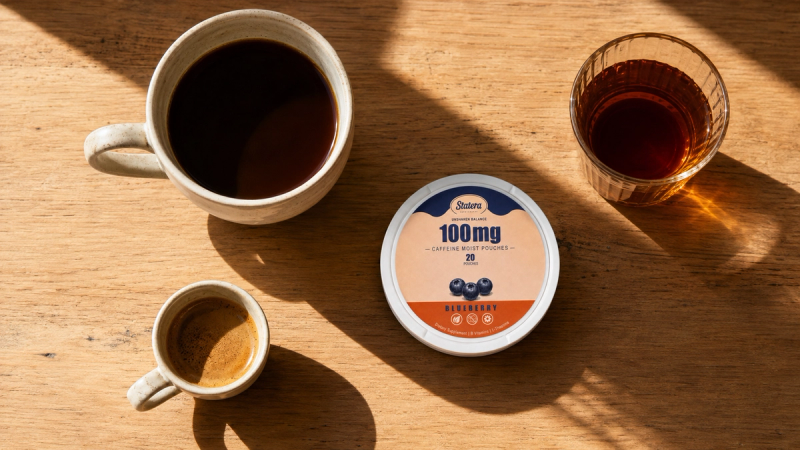
Is 100mg of Caffeine a Lot? Putting the Number in Context
See how 100mg compares with specific servings of coffee, espresso, tea and energy drinks—and why portion size, timing and sensitivity matter.
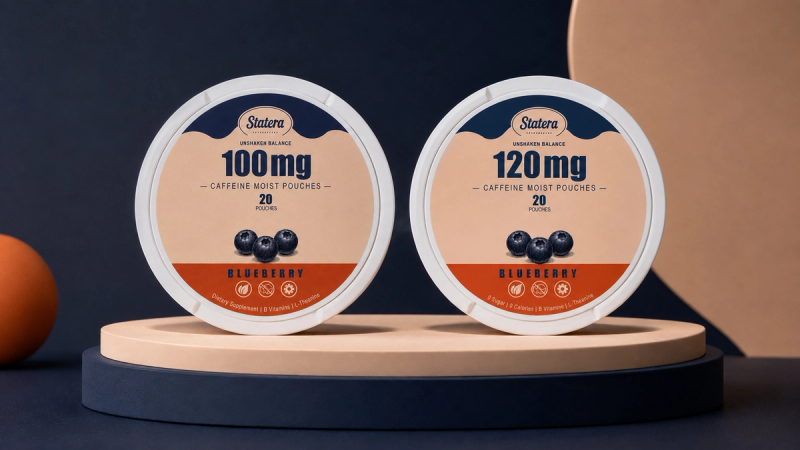
100mg vs 120mg Caffeine Pouches: What Actually Changes?
STATERA 100mg and 120mg caffeine pouches differ by 20mg per pouch. See the math, the current product labels and what to compare next.